Innovation through Porsche Design
From titanium to titanium carbide: materials that have changed the industry.
All sizes shown for Porsche Lifestyle products are EU sizes. Please order one size larger for your standard North American size.
How collaborative projects led to a Porsche watch manufactory.

Since the early 1970s, Porsche Design has represented watches that are based on the same design principles as a sports car: reduced, functional, uncompromising. What fascinates many collectors – and sometimes surprises them when they look at the dial – is the story behind it. Because in the beginning there was no internal workshop, just a network of selected partners. It was only through these collaborations that Professor Ferdinand Alexander Porsche's design vision gradually transformed into an independent watch manufactory.
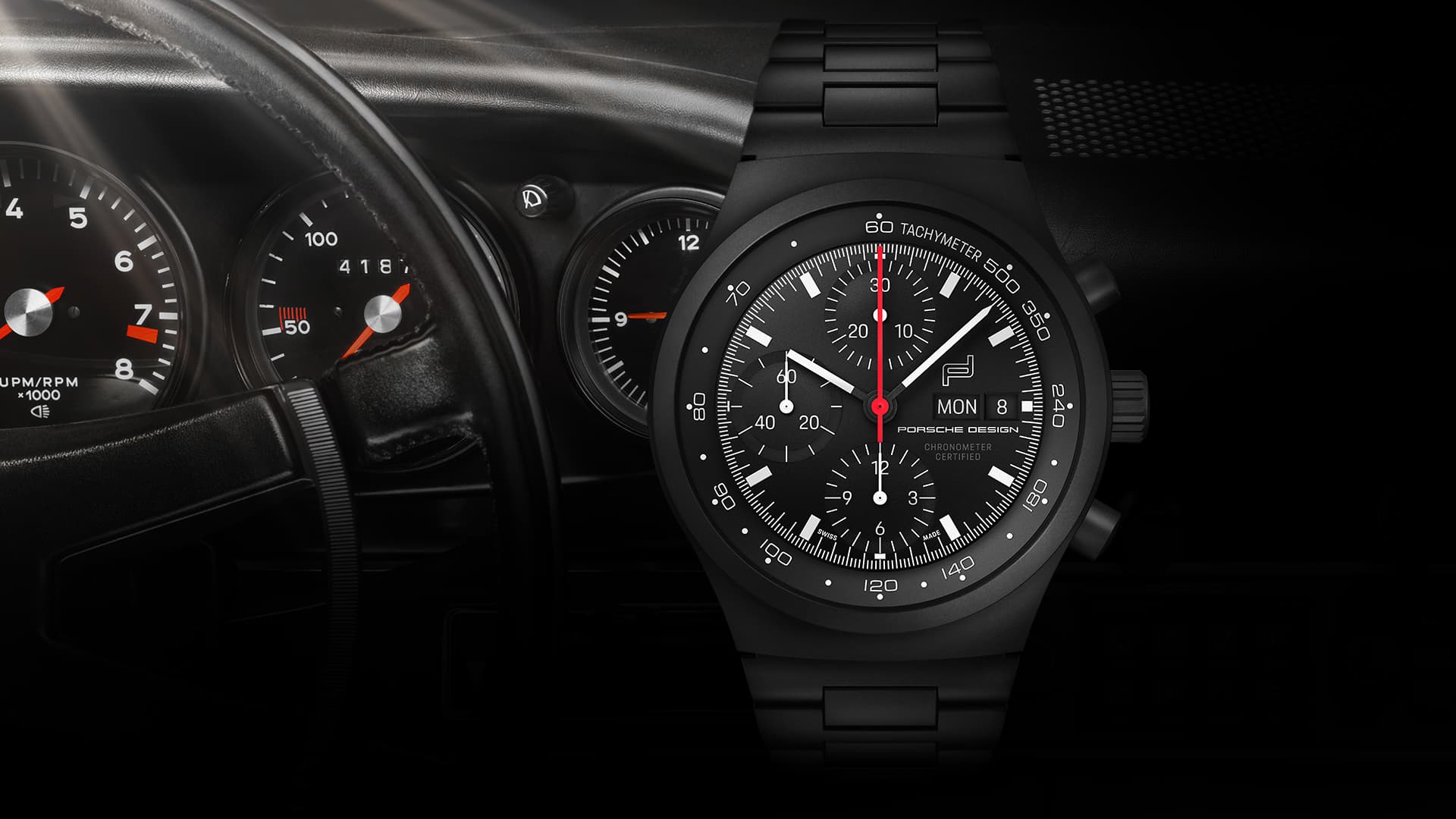
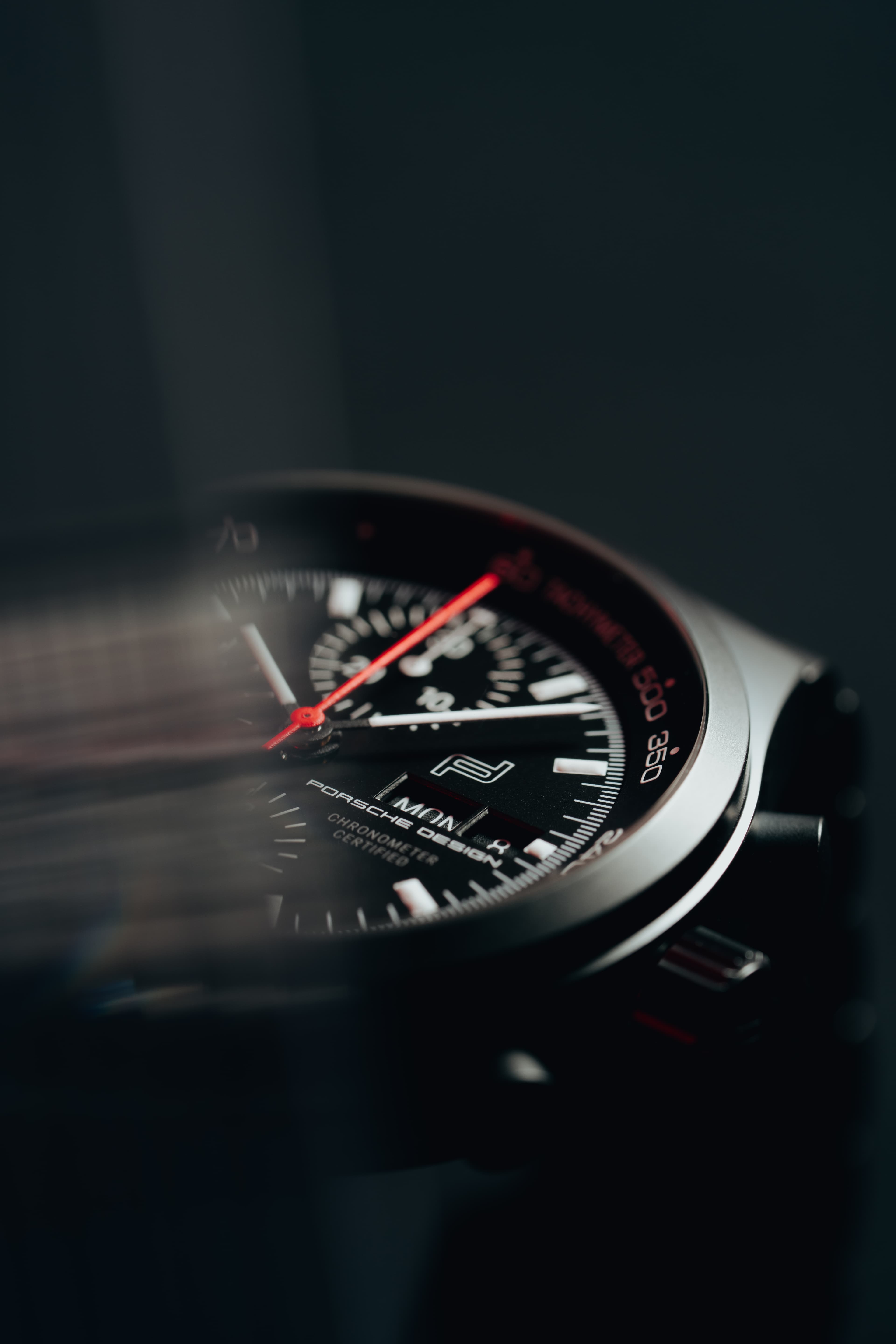
Today, a Chronograph 1 on your wrist evokes very specific imagery: the Black instrument look, White luminous scales, a Red chronograph hand are reminiscent of the cockpit of the Porsche 911. However, while this design originated from the studio of F. A. Porsche from the very beginning, the first watches also bore other names on the dial. ‘Porsche Design by Orfina’, later ‘Porsche Design by IWC’ – and in a later stage, models from the cooperation with Eterna. These double signatures are not a coincidence, but the visible expression of a strategy: first collaborate, then become a manufactory.

In 1972 Porsche Design presented the first Chronograph I – a watch that caused a sensation in the watch world. Firstly, because it was one of the first chronographs produced in series with a completely Black coating. Secondly, because it expressed a new understanding of the wrist instrument with its matte Black background, White indices, Red accents, maximum readability.
To implement this idea, Porsche Design collaborated with the Swiss manufacturer Orfina. This is why the watch bears the clear signature, ‘Porsche Design by Orfina’ – an indication of how clearly the roles were divided. The design, the proportions and the functional logic came from the environment of F. A. Porsche; the industrial production and the technical implementation were the responsibility of Orfina.
Contemporary reports and later analyses – for example at Fratello or in relevant vintage archives – emphasise how unusual this approach was at the time. A design studio, known from the automotive world, shapes the overall design of the watch, while a specialised manufacturer is responsible for the mechanical inner workings. This collaboration laid the foundation for the myth of the Chronograph I and explains why early examples show different movement variants and dial layouts, but always the same clear design style.

The first arena in which the Chronograph I proves itself is not the shop window, but the racetrack. Motorsport enthusiasts have long appreciated the watch for a feature that F. A. Porsche prioritised from the very beginning: maximum readability under pressure. The matte Black dial, the luminous White indices, the striking Red chronograph hand – an information system that works, even at high speeds and in stray light. What originated in the cockpit of the 911 proved to be equally suitable for wrists.

This reputation did not go unnoticed. In the 1970s, specially configured variants were developed for military units – often described in the specialist literature as Bundeswehr or military chronographs. On some of these dials, the Orfina logo disappeared, making way for a clearer, more functional marking. The requirements are the same as on the racetrack: readability, robustness, reliability.
At the same time, the watch was gaining visibility in the media. Film appearances and magazine reports shaped the image of the ‘Black Porsche Design Chronograph’ as an expression of a certain profile: technically sophisticated, understated in expression, unmistakable in attitude. In all of these contexts, the principle was consistent. The concept came from Porsche Design, the manufacturing was the result of collaboration – and the double signature on the dial told exactly that story.

At the end of the 1970s, a new chapter began. Porsche Design changed its watchmaking partnership and started working with IWC Schaffhausen. During the 1980s and 1990s, this alliance resulted in models that are now considered milestones – not only for the brand, but for the industry as a whole.
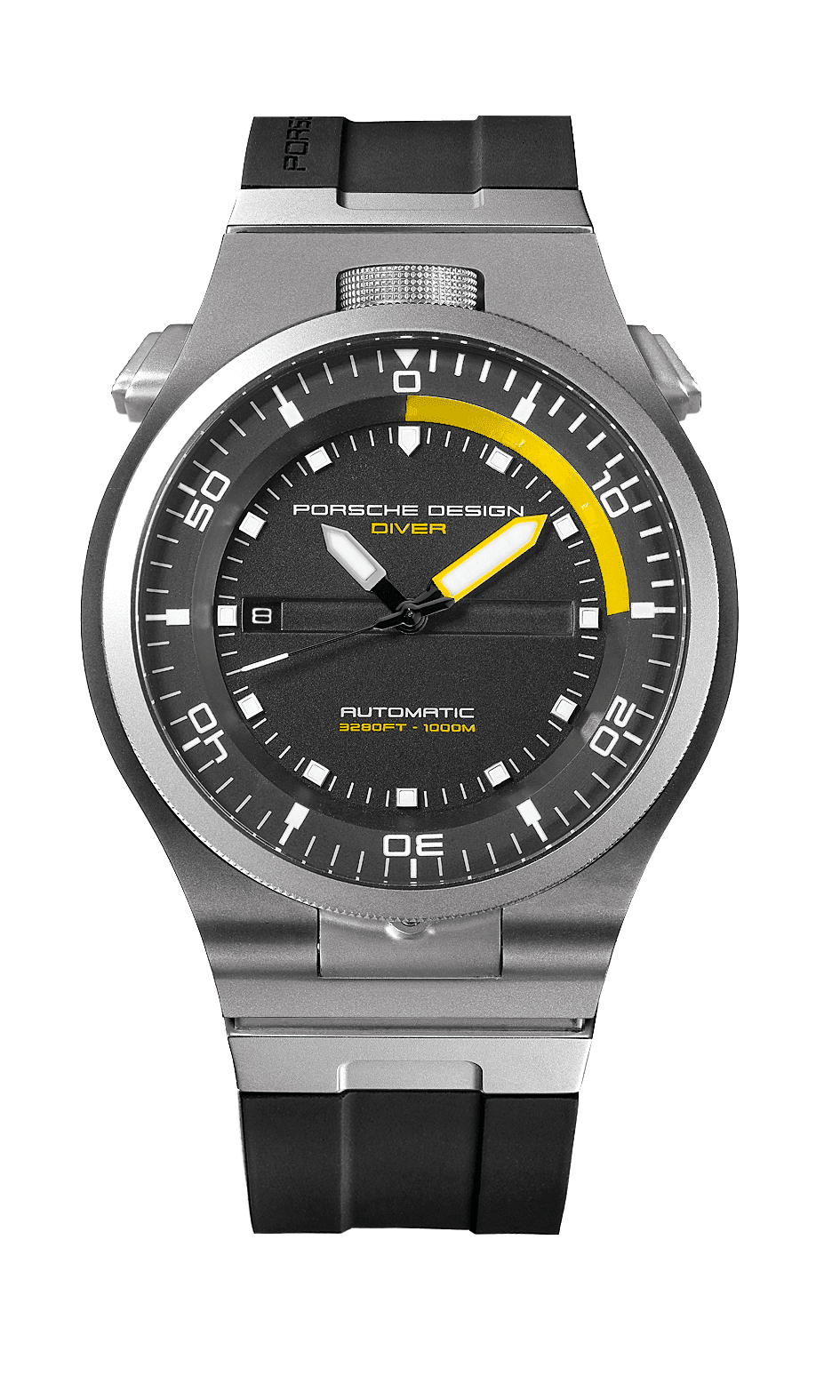
The titanium chronographs and diving watches such as the Ocean 2000 were especially influential. They are repeatedly mentioned in contemporary magazines, in modern retrospectives by Monochrome or Swisswatches and in brand histories as early references for the use of titanium. The material, previously known primarily from aviation and motorsport, was used consistently in the watch: lightweight, robust, hypoallergenic and with a matte, technical look that perfectly matches the design philosophy of Porsche Design.
The dials of this period often bore the inscription ‘Porsche Design by IWC’. For collectors, this was more than just a stylistic footnote. It showed how the brand was evolving its approach: from the Black stainless steel case of the Orfina era to high-tech materials that redefined the concept of timepieces – still based on a clear, minimalist design.
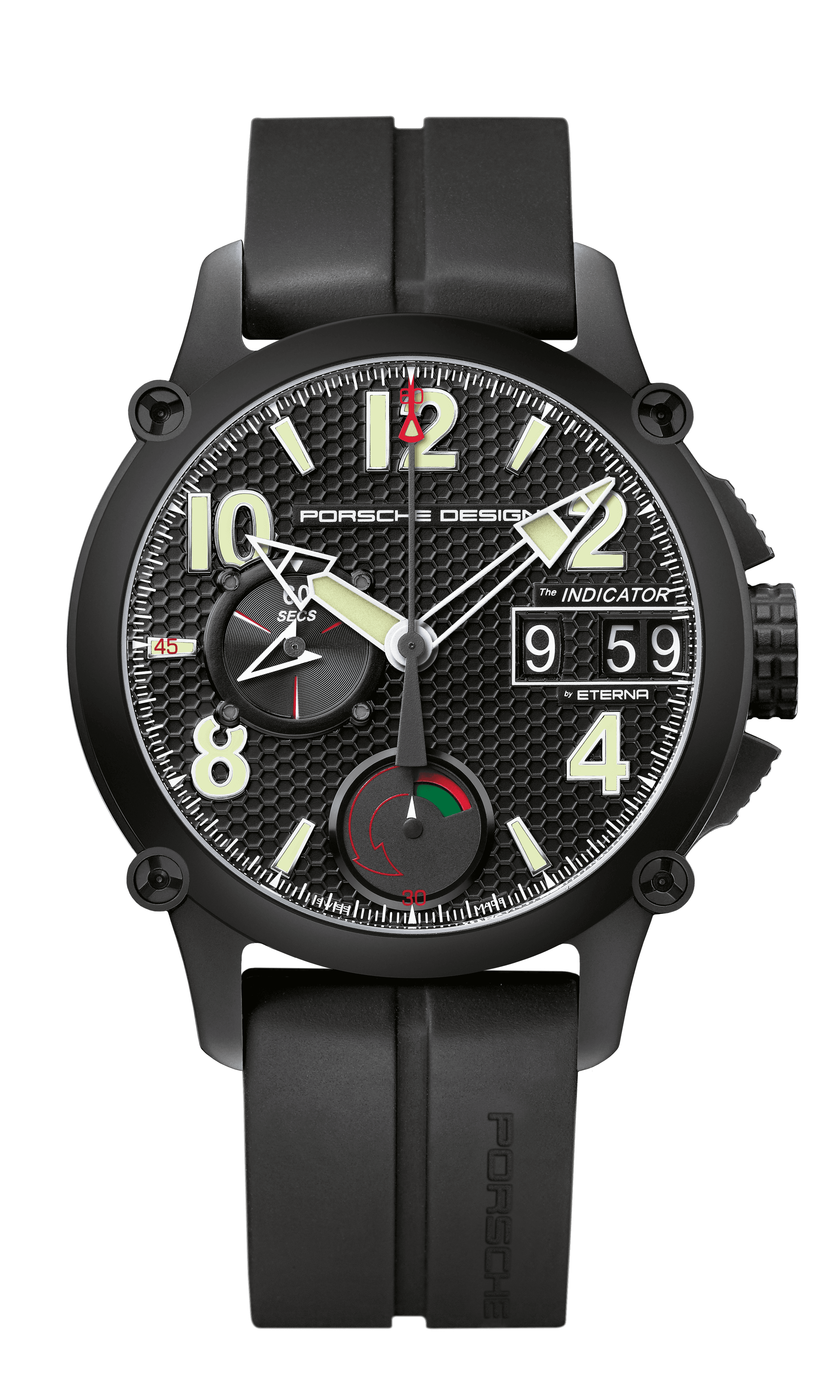
With the end of the long-standing cooperation with IWC, another important phase began for Porsche Design. In the late 1990s, the traditional brand Eterna became the focus of watch production for Porsche Design. The collaboration quickly took on a strategic dimension: Porsche Design deepened its commitment at the corporate level, creating the basis for a partnership that went far beyond classic contract manufacturing.
Eterna contributed its experience in Swiss watchmaking, while Porsche Design defined the shape, usage scenarios and brand experience. This resulted in sporty, technical chronographs and three-hand watches that modernised the familiar motifs – clear design language, instrumental dials, focus on optimal readability.
For experts, this period marked a transition: Porsche Design was no longer acting solely as an external design provider, but was beginning to strategically shape the technical aspects of the products. The signature on the dial remained clearly Porsche Design, but in the background, the expertise on how a watch must be designed and produced to live up to the Porsche philosophy was growing.
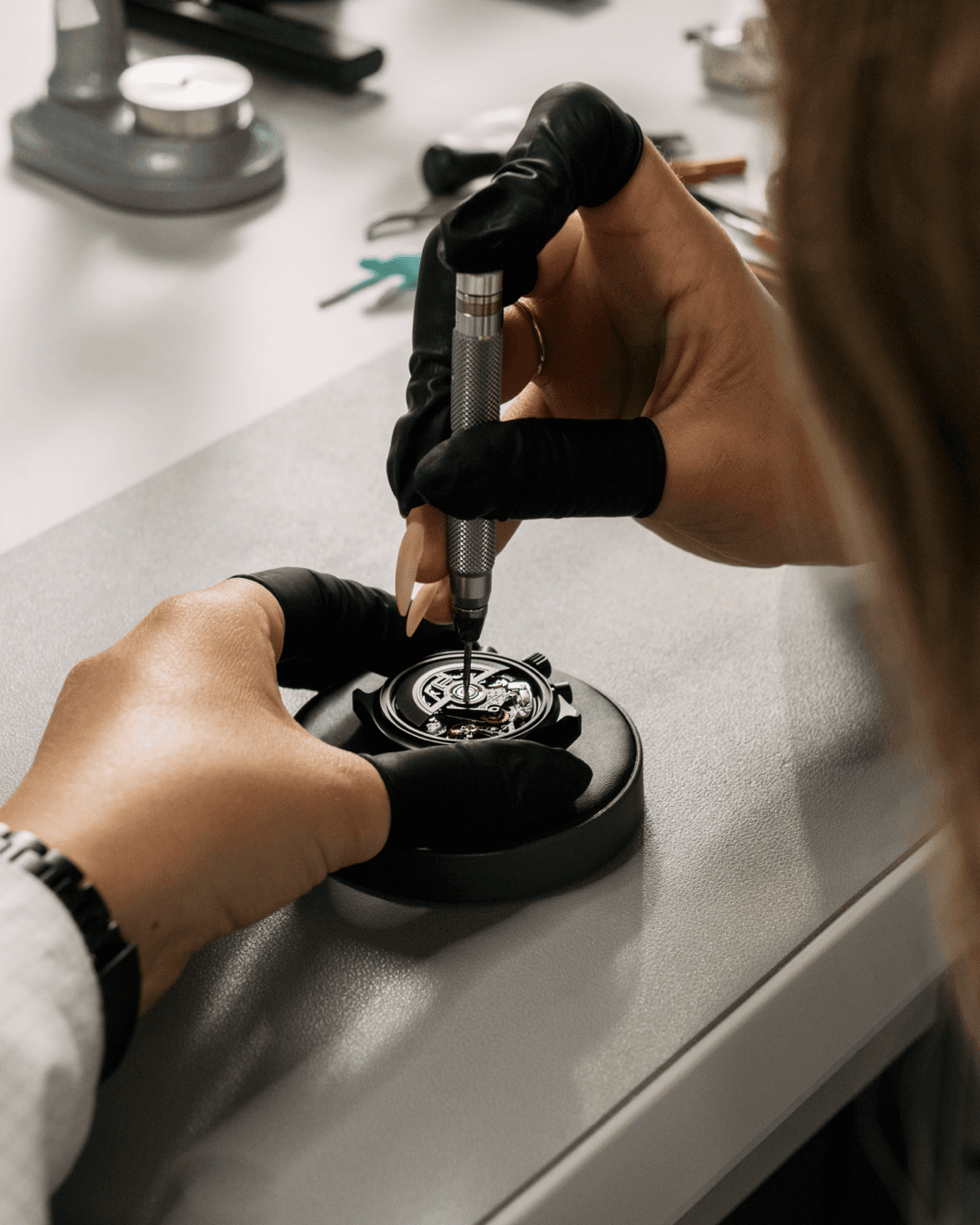
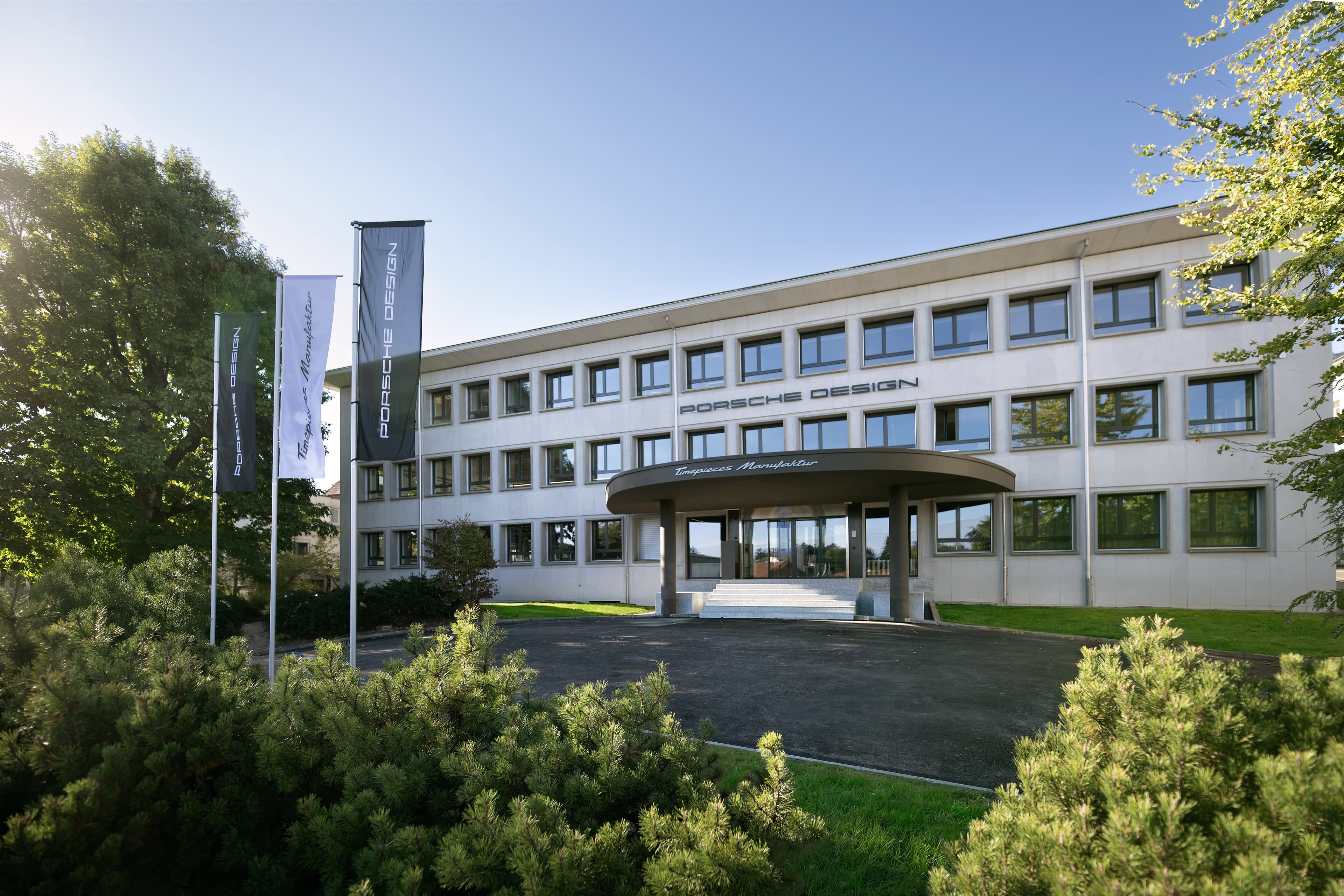
The decisive step towards independence was marked by the founding of Porsche Design Timepieces AG in Switzerland in 2014. What had previously been built up over decades – the interplay of design expertise, technical experience and a clear brand promise – was now coming together in its own structure.

Today, watches such as the Chronograph 1 – 1972 Limited Edition or the Chronograph 1 – All Black Numbered Edition, which at first glance bear the DNA of the original from 1972, are created under this banner. Specialist media outlets such as Revolution, Swisswatches or Monochrome emphasise how consciously these models reference their origins: from the matte Black appearance to the typography and the chronograph logic.
What matters is what has changed internally. With calibres such as the WERK 01.140, which were developed in collaboration with specialised partners and implemented according to the standards of Porsche Design, the brand's characteristic design merged with an independent technical signature. The manufactory defines the requirements, specifies the construction and design of a movement, and the producer brings the manufactory's vision a reality in large-scale production.

Anyone holding a vintage Porsche Design watch can read the brand's history directly from the dial. ‘Porsche Design by Orfina’, ‘Porsche Design by IWC’ or later models from the Eterna era each mark a stage on the way to the present Porsche Design Timepieces Manufactory. The additional names did not contradict the brand; they explained it.
In the 1970s and 1980s, it was a deliberate model. Porsche Design focused on what made the brand unique – the focus on function, the design, the transfer of automotive design to the world of watches. Specialists such as Orfina, IWC or Eterna took on the role of manufacturing partner. From today's perspective, it is clear how consistent this strategy was. It made it possible to create iconic products early on, to gain experience in materials, manufacturing and technology – and, based on this, to develop the in-house manufactory that continues this legacy.
From titanium to titanium carbide: materials that have changed the industry.

Professor Ferdinand Alexander Porsche and the idea that changed everything.
Change of delivery method
All products will be removed from your shopping basket
If you change the delivery method, all products will be removed from your shopping basket. This is for technical reasons, as some products are not available with all delivery methods.
